Happy Little Playground: Designing with Joyful Color Fonts
In the world of digital design, we often find ourselves caught in a loop of minimalist sans serif fonts and elegant serifs. While those are essential tools for body copy, they don't always capture the specific energy of a childhood brand or a whimsical event. That is where the Happy Little Playground comes in. It isn't just a typeface; it is a design asset that brings a distinct, handmade personality to the table. As a premium font, it serves a very specific purpose: to inject color, texture, and a sense of carefree fun into your projects without requiring you to manually add gradients or textures in post-production.
The Visual Personality of the Happy Little Playground Font
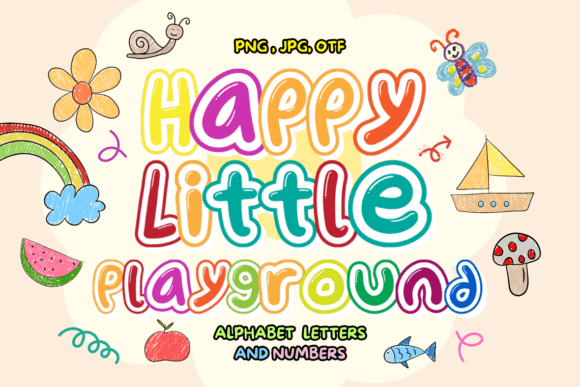
When you first look at the Happy Little Playground, you will notice that it defies the standard rules of typography. Unlike a traditional black-and-white typeface, this is a color font. The visual characteristics mimic the look of hand-lettering using vibrant, multi-colored markers or crayons. The strokes have a tactile quality—slightly uneven and organic—which gives it an authentic, human touch. This is a far cry from the sterile perfection of vector paths; it feels lived-in and playful.
The style sits comfortably between a bold display font and a playful script. It has the legibility of block letters but the warmth of a handwritten font. This duality makes it incredibly versatile. It carries the "carefree spirit of childhood" mentioned in its description, but it does so with enough structure to remain legible in headlines. For designers, this means you can use it to create an immediate emotional connection with the viewer. It signals that a brand or project is approachable, energetic, and not taking itself too seriously.
Practical Applications: From Branding to Party Decor
Understanding where to deploy a creative font like Happy Little Playground is key to effective design. Because this is a display font, it is not intended for long paragraphs of text. Instead, it shines brightest in high-impact areas where visual hierarchy is established through size and color.
Branding and Logo Design: If you are developing a brand identity for a children’s boutique, a daycare center, or a toy store, this font is an excellent candidate for your logotype. It instantly communicates the nature of the business. However, a word of caution on consistency: because color fonts can be complex, ensure your logo renders correctly across all platforms. You may need to convert the text to outlines for final delivery to ensure the colors remain exactly as intended.
Editorial and Publishing Design: In the realm of editorial design, particularly for magazines, workbooks, or activity books targeting kids, Happy Little Playground works wonders for chapter titles and pull quotes. It breaks up the monotony of standard serif or sans serif body text, guiding the reader’s eye to specific sections. It adds a layer of visual interest that keeps younger readers engaged.
Packaging and Web Design: For packaging design, especially on shelf-ready cartons for snacks or toys, the vibrant nature of the font helps the product pop. On the web, use it sparingly for hero section headers or call-to-action buttons related to specific campaigns. It adds a burst of personality to social media graphics, particularly for Instagram stories or Pinterest pins where grabbing attention in a split second is vital.
Integrating the Font into Your Workflow
One of the most common hurdles with specialty fonts is technical compatibility. It is important to note that Happy Little Playground is a color font compatible with major design software including Photoshop, Illustrator, Silhouette, and Inkscape. This compatibility is crucial for maintaining a smooth workflow. You do not want to purchase a font only to find out it doesn't render colors in your preferred software.
When working with this typeface, you are dealing with a specific layer of modern typography. If you are using it for print—such as invitations or greeting cards—always perform a test print. Screen colors (RGB) and print colors (CMYK) behave differently, and the vibrant hues of the Happy Little Playground may look slightly different on paper. Checking your Ultimate Font Guide for specific color font usage tips is a recommended step before finalizing large print runs.
Strategic Font Pairing and Hierarchy
No font exists in a vacuum. To create professional designs, you need to pair Happy Little Playground with a supporting typeface. Because this font is loud, colorful, and textured, your secondary font should be quiet and neutral.
- The Clean Contrast: Pair the Happy Little Playground with a geometric sans serif font. The clean lines of a sans serif will ground the playful nature of the display font, creating a balanced visual hierarchy.
- The Readability Factor: Use the Happy Little Playground for headlines only. Use a highly legible serif font or a simple sans serif for your body copy. This ensures that your message is communicated clearly while the headline draws the viewer in.
- Spacing and Kerning: Handwritten fonts often require manual kerning adjustments. Because the letters in Happy Little Playground are designed to look organic, they might sit a bit closer or further apart than standard block letters. Zoom in and adjust the spacing between characters to ensure the word looks cohesive rather than disjointed.
Commercial Licensing and Project Fit
Before incorporating any design asset into a commercial project, reviewing the licensing terms is a non-negotiable professional step. If you are a small business owner using Happy Little Playground for merchandise—like t-shirts or mugs—you need to ensure your license covers commercial use and the specific volume of production.
Evaluating the "fit" of the font also involves looking at the overall tone of your project. If your brand voice is serious, academic, or ultra-luxurious, a playful color font might clash with your messaging. However, if you are creating materials for school themes, summer camps, pediatric marketing, or casual lifestyle brands, this font aligns perfectly with the audience's expectations. It bridges the gap between professional design assets and the authentic look of hand-drawn art.
Ultimately, the Happy Little Playground is more than just a collection of colorful letters; it is a tool for storytelling. It allows designers and creators to bypass the complex process of texturing and coloring standard fonts, offering a ready-made solution that radiates warmth and creativity. By using it thoughtfully within your layout, pairing it with clean typography, and ensuring it fits your commercial needs, you can leverage this font to create designs that truly resonate with your audience. Let your imagination run wild, but let your strategy guide the execution.