Bring a Touch of Nature to Your Headings with Aloa
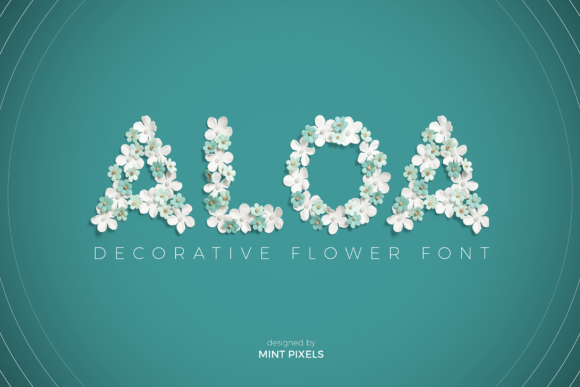
In the crowded landscape of digital design, finding a typeface that feels genuinely organic can be a challenge. We often see geometric sans serifs and stiff serifs dominating the screen, but sometimes a project calls for something softer, something that evokes the delicate beauty of a garden. Enter Aloa, a bitmap-type flower decorative font designed specifically to infuse your headings with a natural, botanical charm. It is not just a set of letters; it is a visual element that acts as a miniature illustration for every character you type.
Understanding the Botanical Aesthetic of Aloa
Aloa falls into the category of decorative display fonts, but its execution is quite distinct. Being a "bitmap" typeface means it relies on specific pixel arrangements to create its look, though in modern usage, this usually translates to a style that mimics intricate floral patterns within the letterforms. Imagine the strokes of the letters being composed of vines, leaves, and petals. That is the essence of Aloa. It possesses a personality that is romantic, whimsical, and undeniably feminine.
However, do not mistake "decorative" for "cluttered." The strength of this typeface lies in how it balances complexity with legibility at larger scales. When you set a headline in Aloa, the eye is immediately drawn to the texture of the letters. It transforms simple text into a piece of art. This makes it a fantastic tool for designers who want to add a premium font aesthetic to their work without needing to manually illustrate every header. It captures the essence of a handwritten font's warmth but with the structured elegance of floral motifs.
Where Aloa Shines: Practical Applications
While a standard sans serif font is perfect for body text, Aloa is built for the spotlight. Its primary function is to serve as a headline or title font, where its intricate details can be fully appreciated. Here are some specific scenarios where this floral typeface proves invaluable:
- Wedding Invitations and Stationery: This is perhaps the most natural fit for Aloa. The romantic, flowery style aligns perfectly with the sentiment of weddings. It works beautifully for the couple's names on the save-the-dates or the main header of the invitation suite.
- Product Packaging and Labels: If you are designing for a boutique brand—think artisanal soaps, scented candles, or organic teas—Aloa can define your brand identity. It signals to the customer that the product inside is crafted with care and natural ingredients.
- Social Media Graphics: In the fast-scrolling world of Instagram or Pinterest, a unique creative font stops the thumb. Using Aloa for quotes, announcements, or sale headers can give your feed a cohesive, garden-inspired aesthetic.
- Editorial Design: For magazines or blog posts focusing on lifestyle, gardening, or beauty, a drop cap or pull quote in Aloa can break up the monotony of standard text blocks and reinforce the theme of the article.
Strategic Design: Pairing and Hierarchy
One of the most common pitfalls with using a decorative display font is poor pairing. Because Aloa is so visually rich, it demands a partner that is quiet and unassuming. If you pair it with another ornate script font or a busy serif font, the result will be visual chaos.
The best approach is to look for balance. A clean, geometric sans serif font often works best as a companion. The stark contrast between the organic, flowing lines of Aloa and the rigid, clean lines of a modern sans serif creates a dynamic visual hierarchy. This ensures that your heading grabs attention while your body text remains easy to read. Think of Aloa as the loud, charismatic speaker at a podium, and your body font as the quiet, supportive notes on the page.
Furthermore, consider the spacing. Because floral fonts can feel dense, tracking (letter-spacing) out slightly can often improve readability and give the design room to breathe. This is a subtle adjustment that can significantly elevate the professionalism of your layout.
Navigating Technical Constraints and Compatibility
It is vital to understand the technical limitations of any design asset before incorporating it into a workflow. While Aloa is a versatile creative font, it has specific constraints regarding hardware compatibility.
Important Note on Cricut Machines: The OTF and TTF files provided for the Aloa font are not compatible with Cricut. This is a crucial distinction for crafters. If your workflow involves cutting machines for vinyl decals or paper crafts, you will encounter rendering issues with this specific typeface. It is optimized for digital design software (like Adobe Photoshop, Illustrator, or Canva) and standard print methods, rather than vector-based cutting paths.
For entrepreneurs and designers working in digital marketing, web design, or standard offset printing, this limitation will not affect you. However, if you are a hobbyist who primarily designs for physical cutting projects, you will need to look for a different asset or use Aloa strictly for print-and-cut projects where the background is printed rather than cut.
Evaluating Fit for Your Brand Identity
Choosing a typeface is a branding decision, not just an aesthetic one. Before committing to Aloa for a logo design or a full brand identity, ask yourself if the "personality" of the font matches your target audience.
Aloa projects a specific vibe: it is gentle, natural, romantic, and artistic. It is an excellent choice for brands targeting women, particularly in the wellness, beauty, or lifestyle sectors. It suggests softness and attention to detail. Conversely, it would likely feel out of place for a fintech startup, a heavy machinery manufacturer, or a corporate law firm. In those contexts, the floral elements might undermine the perception of authority and stability.
When testing the font, type out the specific words you intend to use. Some letter combinations in decorative fonts can create awkward spacing or ligatures. Check how the capital letters interact with the lowercase ones. Ensure that the "flower" elements do not obscure the legibility of the letter itself. For example, ensure the distinction between a lowercase 'a' and 'o' is clear, even with the botanical embellishments.
Final Thoughts on Typography and Atmosphere
Typography is the voice of your design. While a serif font might whisper tradition and a sans serif might shout modernity, Aloa sings of nature. It is a specialized tool in a designer's kit, intended for moments where you want to evoke emotion and atmosphere rather than just convey information.
By using Aloa thoughtfully—respecting its need for white space, pairing it with simple counterparts, and keeping it away from Cricut cut files—you can leverage this typeface to create stunning visual communications. Whether you are a blogger looking to beautify your headers or a small business owner crafting the perfect label, this floral font offers a direct line to a softer, more organic aesthetic.