Knock Work: The 3D Pop Art Font That Does the Heavy Lifting
There’s a specific kind of frustration every designer knows. You’re building a layout for a music festival poster or a new streetwear brand, and you know exactly what you want: that thick, punchy, three-dimensional text that screams "buy me" or "look here." You start the manual process—typing the text, duplicating the layer, offsetting it for the shadow, adding another layer for the highlight, and painstakingly merging them. It takes hours, and if you need to change a single letter, you have to start over. This is the bottleneck where creativity dies, but it is also exactly the problem Knock Work was built to solve.
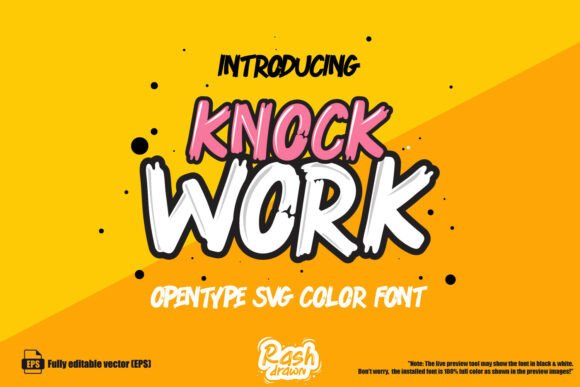
As a premium font built on OpenType-SVG technology, Knock Work isn't just a collection of vector outlines; it is a bitmap-embedded typeface that captures high-fidelity color and texture directly within the font file. Think of it as a creative font that comes pre-rendered. When you type, the font automatically applies thick, bubbly outlines and realistic, layered shadows to create an instant 3D comic effect. It captures the energy of modern pop art and graffiti culture without requiring you to be a Photoshop wizard. For the entrepreneur or designer who values their time, this is a game-changer. You type, and the "punch" is already there.
Visual Personality: More Than Just a Pretty Face
Understanding the visual weight of Knock Work is key to using it effectively. This isn't a serif font for body text, nor is it a delicate script font for wedding invitations. It is a heavy-hitting display font designed for high impact. The aesthetic leans heavily into "swell" lettering—a style popularized by graffiti and comic books—where letters appear to inflate off the page.
The appeal lies in its texture. Unlike standard vector fonts that can look sterile and flat, Knock Work retains the grain and grit of street culture. The color gradients are baked in, meaning the shading remains consistent regardless of how you scale the text. This brings a level of professionalism to social media graphics and packaging design that usually requires a professional illustrator. It bridges the gap between modern typography and illustration, offering a commercial font solution that feels hand-crafted and bespoke.
Strategic Applications: Where Knock Work Shines
Knowing where to deploy a display font like this is half the battle. Because of its visual density, Knock Work thrives in environments where brevity and impact are paramount. It is not designed for long-form reading, but rather for the moments that stop the scroll.
Branding and Logo Design
For logo design, particularly for brands targeting a Gen Z or Millennial demographic, this font offers an immediate personality injection. Think of a local skate shop, a podcast about urban gardening, or a boutique hot sauce brand. Using Knock Work in your brand identity suggests confidence, energy, and approachability. However, a word of caution: because this is a stylistic typeface, it anchors a brand to a specific trend. If you are designing for a corporate law firm or a luxury watch brand, this is the wrong tool. But for a brand that wants to feel loud and current, it is perfect.
Publishing and Editorial Design
In editorial design, hierarchy is everything. You need a header that grabs the reader by the collar before they turn the page. Knock Work is excellent for magazine covers, pull quotes, and section headers in digital publications. It pairs surprisingly well with clean, geometric sans serif fonts for body copy. The contrast between the playful, shadowed headline and the clean body text creates a dynamic reading experience that feels curated rather than chaotic.
Digital Assets and Web Design
On the web, attention spans are short. If you are designing a landing page for a flash sale or a banner for a YouTube channel, Knock Work provides the necessary visual hierarchy. In web design, it serves as a focal point. It draws the eye immediately to the Call to Action (CTA). Because it is an OpenType-SVG font, it renders beautifully on high-resolution screens, maintaining its color fidelity where older, flat design assets might look dated.
The Mechanics of Impact: Readability and Hierarchy
One of the most common mistakes with modern typography is sacrificing legibility for style. With Knock Work, you have to respect the font's density. Because the letters are thick and possess internal shadows, kerning (the space between letters) is critical. If you set the tracking too tight, the letters will crash into one another, creating a blob of ink rather than readable text.
Always increase the tracking slightly when setting headlines with this font. This allows the 3D effect to breathe and ensures that each letterform is distinct. When it comes to visual hierarchy, use this font exclusively for H1 and H2 headers or short bursts of text like "SALE" or "NEW ARRIVAL." Do not try to force it into navigation menus or sub-headers; it is too heavy for those roles and will compromise the readability of your site or publication.
Practical Workflow: Integration and Pairing
Integrating a specialized asset like Knock Work into your workflow requires a bit of strategy. Because it is a color font, it behaves differently than a standard black-and-white typeface.
Choosing Your Pairings
Effective font pairing is about contrast. Since Knock Work is loud, rounded, and textured, your secondary font should be quiet, structured, and clean. A classic sans serif font like Helvetica, Inter, or Montserrat works beautifully. These fonts step back and let the headline do the talking. Avoid pairing it with other decorative fonts, handwritten fonts, or complex serif fonts, as this will create visual noise that confuses the viewer.
Color and Background Considerations
When using a creative font with baked-in colors and shadows, the background matters immensely. Knock Work generally pops best against solid, high-contrast backgrounds—think stark white, deep charcoal, or vibrant flat colors. If you place it over a busy photographic background, the built-in shadows of the font might clash with the shadows in the photo, making the text hard to read. If you must use a photo background, consider placing a solid shape or a subtle overlay behind the text to ensure the Knock Work letters stand out.
Licensing and Commercial Use
For entrepreneurs and small business owners, understanding the licensing of a commercial font is non-negotiable. Knock Work is a professional tool, and its license typically covers a wide range of uses, from physical merchandise (like t-shirts and stickers) to digital ads. However, always review the specific End User License Agreement (EULA) before launching a large-scale campaign. Ensure your license covers the scope of your project, particularly if you are embedding the font in an app or a high-traffic website. This due diligence protects your business and respects the type designers who created the asset.
Bringing the Punch to Your Next Project
Ultimately, Knock Work is about removing barriers between your idea and the final execution. It democratizes a specific, high-skill aesthetic—3D pop art lettering—and makes it accessible to anyone with a keyboard. Whether you are a crafter making stickers for Etsy, a marketer designing a high-converting email header, or a designer building a brand identity for a new startup, this font provides a shortcut to high-impact visuals.
It eliminates the need for complex layering software and steep learning curves. By handling the "heavy lifting" of the design, Knock Work frees you up to focus on the message. It allows you to bring the punch to your design without breaking your workflow, ensuring that your final product looks energetic, professional, and ready to compete in a crowded visual landscape.